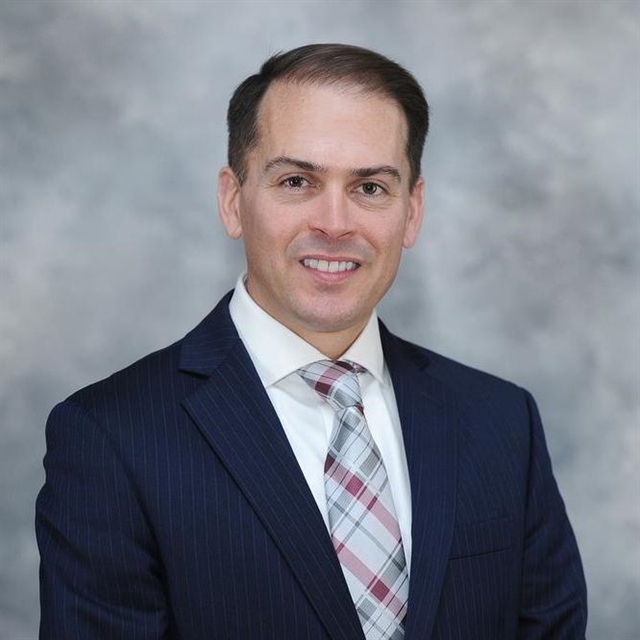
Dr. Richard Barnhouse has been the president of Waukesha County Technical College since January 2021. On July 1, 2026, Barnhouse became chair of the Higher Education Regional Alliance of Wisconsin (HERA), succeeding Dr. Cindy Gnadinger, the president of Carroll University. Barnhouse recently sat down for the following Q and A:
Q: What do you find most compelling about HERA?
A: Any time you can get 16 higher education institutions together and try to advance things collaboratively, that’s pretty unique. There are other organizations that do this type of thing, but this group genuinely wants to work together and genuinely has each other’s best interests at heart — which is really unique in higher education, because it’s such a competitive space.
We’re all a part of other systems. But we really operate like our own system within other systems. And I think it does great things for the state because it combines other systems. We’re looking at things regionally and statewide, but also how things are impacting higher education nationally. And then we’ve got our industry partners and folks from the private sector that are part of this as well.
We’re certainly focused on the greater Milwaukee area, Southeast Wisconsin. But we philosophically are thinking far beyond those boundaries.
Q: What made chairing HERA worth your time and commitment?
A: Now is the perfect time to look back, and then consider what we want to change. That’s what excited me more about this opportunity now than it would have even five years ago.
It’s an opportunity to work with my good friends and colleagues, and for all of us to think about the future of HERA. We’re almost at the 10-year point. And there could be a pretty large change in our direction.
Most of the folks who started this organization aren’t here anymore. What do we do as the second generation of leaders, with a few people carrying on, to chart the course for the next 10 years?
Q: How have you seen the organization evolve since it was founded?
A: When I got involved six years ago, it was really focused in narrow lanes. That’s often a great way to get something off the ground where you’ve got highly defined principles and direction. Over time, it has really grown and pushed the bookends out to look at things more broadly. So I’ve seen it really grow in what it looks at, what college presidents are interested in, and that’s really kind of exciting.
Q: You talked about HERA potentially changing course. Do you have specific priorities in mind, or are you going to build consensus?
A: We are going to build consensus. We just sent out a survey to our leaders. We’re asking if people like what we’ve done, and largely the answer is going to be yes. So now what? We’ve got a planning meeting coming up in July. We’ll spend some time with the survey results and then we’ll start to chart the course forward.
Largely what I’ve heard from peers and colleagues is we should be focusing on things that each of our institutions can’t do alone. If there are things HERA is doing now that each of our institutions can do on our own, we could move away from some of those things and start focusing on the bigger things. I also think we need a bit of a national perspective. I think we’ll head that direction.
Q: In terms of a national perspective, what would you be interested in exploring?
A: Frankly, the state of higher education. We’re the generation of leaders who are in higher education at a time of great disruption. Some of that is self-born from what happened in previous decades. Some of it is coming our direction legislatively — local, state and federal. And then just the changing thoughts and considerations around higher education.
Also the speed at which higher education needs to move. You can’t update your curriculum every four years anymore.
Taking a look at the health of higher education, how we mitigate some of the issues, and make sure we’re delivering for taxpayers, residents and businesses — throughout the state, and certainly in Milwaukee.
Q: How unique is it to have all these institutions collaborating?
A: It’s not necessarily unique to have a group that meets. What makes HERA unique is that it is genuinely what’s in the best interest of the region.
There’s almost no competitiveness. And if there is competitiveness, It’s in a very collegial, sportsman-like way. So many institutions are facing significant financial challenges across the country, including the demographic decline. It’s all competitive and quite combative nationally. And then we have this group, HERA, looking at things a completely different way.
And I give (former UWM chancellor and founding HERA chair) Mark Mone a lot of credit for this, the way he set this up, the philosophical underpinnings — we’re going to collaborate, we’re going to be colleagues and friends. That is not necessarily written down anywhere, but that is the soul of HERA. And I think that that’s the thing that makes it so unique.
Q: How could institutions work together to address some of those big-picture issues?
A: We’ve got to collaborate on curriculum. A college used to think about its curricular array on its own. When you think about the curricular array across Southeast Wisconsin, how many institutions are providing what? And do we think about centers of excellence in different areas depending on what the programming is?
If we’re building a program, we need to be thinking about what it means for the colleges around us. How do they connect to this? How does everybody have some benefit? So that it’s not just another engineering program that’s going to compete with everybody else that’s offering engineering. That needs to be a big part of the conversation.
A student might come to us and say, this is what I want to do. And we’d say, we can do that. But where’s the best program? If it’s, say, at Carthage, let us help you get to Carthage. You’ll find that’s a lot better for you. And then we have students referred to us. So it works out far better for the student and their family, and it’s better for each college.
I also think there might be things that we need to take on legislatively together, whether it’s federal or state, and stand together in support of things and in opposition to things, depending on what the issues are.
Q: HERA has had success developing microcredentials. What role do you see microcredentials playing in HERA’s future?
A: We’ve been really successful in getting quality microcredentials built and ready to go. The collaboration between institutions has been really impressive. I think the question that we’ll seek to understand and will help us make decisions will be, is this of value to a student, to an employer? And that’s going to get fleshed out over the next couple of years. I think the jury’s out on that.
Q: What should people know about the role that HERA and its institutions play in shaping the workforce and helping employers?
A: Shaping the workforce is one of the core principles of HERA, which is to develop relationships with employers, business and industry, to make sure we understand what the needs are and deliver on those needs. What they expect is more important now than ever. And that’s something HERA institutions are really committed to, that we are delivering the graduates they want and their skill set is what they expect.
Q: What are some other challenges and opportunities you see?
A: One of the challenges that we’re all facing across the country is, how are new technologies changing what our students need to know? And how is that changing the work environment?
AI, quantum, and humanoids — that’s the triangle of technologies. How will they change what’s needed? And then how do we ensure that we’re delivering the grads that people need? And how are we helping businesses understand what they need?
One of the responsibilities of a college, obviously, is to pump out amazing grads. The other part that often goes undiscussed is a college’s responsibility to ensure that they are informing and working with businesses and industries in their region to make sure that they’re up to speed with what’s needed.
That’s certainly one of the challenges because things are moving so quickly. If you take our undergrad program in AI, that curriculum is changing every three to four months. That never happens in higher education. So how do we keep up with that?
As far as the opportunities, I think HERA has an opportunity to have a real moment in defining why higher education is more important now than ever. Maybe programs are different. Maybe the system is different. But I think HERA is on the precipice of having a moment where we can make it clear: Here is the real value of higher education, and this is what it means for the economy.
And I think we’ve got to talk in terms of the local economy, not just the economy. This is what it means in the Third Ward. This is what it means in Riverwest. This is what it means in Waukesha, Pewaukee, Ozaukee County. This is the impact.
So I see that as a real opportunity. I think some people would see that as a challenge. The challenge has been around for a long time. Now the opportunity exists to deliver and show why higher education is so valuable and so important, and how it really drives the local economy — not just the state or national economy.
Q: Anything else we should know?
A: I think what I would leave you with is that HERA as an organization is a model that if authentically put into other states and other regions, it would really help those areas flourish. Instead of having colleges and universities competing for everything, it could get them collaborating and sharing resources. That’s a better model moving forward than being in this constant combative, competitive environment that we’ve been in for probably the last 30 years.
Because when you take that external threat away from other colleges and universities, and you’re working together, then you can just do really good work in the classroom. You can focus on things that matter, and you can call a couple of counties over to a counterpart to say, “Hey, how are you dealing with this?” I think that that’s a really good model. And it focuses on the region.
There are lots of national organizations. and there are lots of organizations that higher ed is included in — chambers of commerce or economic development or municipalities. This is a local higher education organization for the sake of that local area.